

You can switch EOR providers safely, but only with a country-by-country transition plan that keeps outgoing employment active until the incoming provider is confirmed payroll-ready. The first move is practical: assemble a transition team spanning HR, finance, legal, IT, and both vendor contacts before any notice is given. What follows is the step-by-step playbook that team needs to run the switch cleanly.
TL;DR:
- Unless a statutory transfer applies, the outgoing EOR usually terminates employment and the incoming EOR issues new contracts, affecting service dates, leave, and notice periods.
- Keep the outgoing EOR active until the incoming provider confirms in writing that payroll setup and registrations are complete for that country, then run a dry run.
- Your company remains the data controller under GDPR and POPIA, so signed Data Processing Agreements with both EORs must precede any employee data transfer.
- South Africa’s Section 197 transfer can preserve service dates and accrued leave, but only when the transaction meets the law’s test for a business transfer.
- Before cutover, employees need written notice covering continuity, payroll dates, benefits, and data handling, plus time to review new contracts and acknowledge them.
Table of Contents
- Key takeaways before you start the switch
- What actually changes when you switch EOR providers
- How long switching EOR providers actually takes
- Step-by-step transition playbook: 8 steps to a compliant switch
- Communicating the change to employees
- Payroll, benefits, and secure data transfer checklist
- Country spotlight: switching EOR providers in South Africa
- Three lessons from South African EOR migrations
- How we help employers switch EOR providers for South African hires
- FAQ
- Sources
Key takeaways before you start the switch
Switching EOR providers changes who your employees’ legal employer is, and in most jurisdictions that means a formal termination and rehire unless a statutory transfer provision applies. That single fact drives almost every risk and decision in this process.
- Payroll gaps, lost benefits continuity, and mishandled data transfers are the three most common failure points in an EOR switch.
- Employee churn rises sharply when communication lags behind the legal and administrative changes happening behind the scenes.
- A well-run switch to a specialist provider often brings clearer local compliance, more predictable pricing, and faster execution than a broad multi-country platform offers for that single market.
Treat the switch as a project with a named owner, not a vendor handoff that runs itself. The rest of this guide breaks down what changes, how long it takes, and the exact sequence to follow.
What actually changes when you switch EOR providers
The most consequential change is invisible on your org chart but very real on paper: your employees’ legal employer changes. Unless a statutory transfer mechanism applies, this typically means the outgoing EOR terminates employment and the incoming EOR issues new contracts, which can affect tenure calculations, leave balances, and notice periods if not handled carefully.
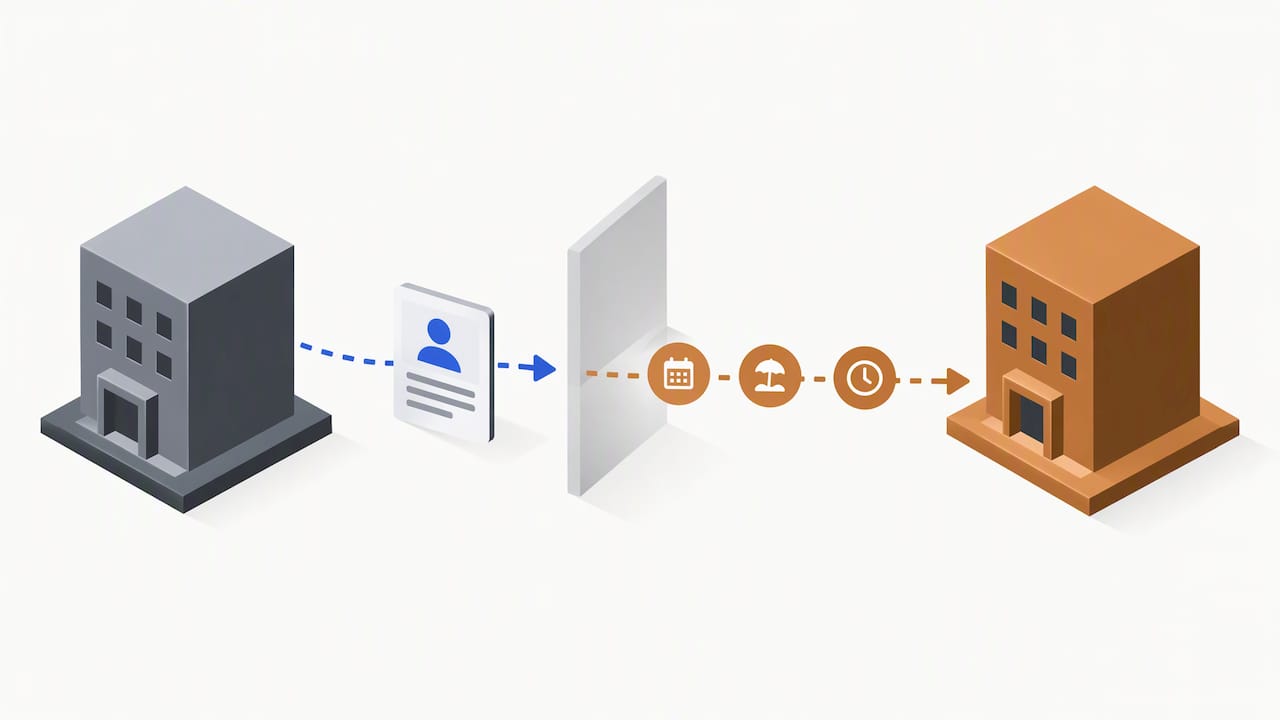
Some jurisdictions recognize a transfer of contracts as a going concern, which preserves service dates and accrued entitlements rather than resetting them. South Africa’s Labour Relations Act is a clear example: Section 197 can permit this kind of transfer when the legal test for a business transfer is met, avoiding a termination and rehire cycle entirely.
Regardless of which mechanism applies, a set of statutory registrations has to move with the employee relationship. For South African hires, that list typically includes:
- PAYE registration and EMP201 monthly filings with SARS.
- UIF (Unemployment Insurance Fund) contributions.
- SDL (Skills Development Levy) registration.
- COIDA (Compensation for Occupational Injuries and Diseases Act) cover.
Under GDPR and POPIA, the employer is generally the data controller while the EOR acts as a data processor. That distinction matters here because it means your company, not either vendor, holds ultimate responsibility for authorizing the data transfer and for tax withholding accuracy, benefits continuity, and dispute liability throughout the switch. Confirming which entity is the legal employer before you sign anything new avoids disputes later.
How long switching EOR providers actually takes
There is no single timeline that fits every switch, because duration depends on how many employees and countries are involved and how complex each jurisdiction’s exit and entry requirements are. A single-country switch with a small headcount can move from kickoff to first live payroll in a matter of weeks; a multi-country migration with notice periods, works council consultations, or immigration dependencies stretches considerably longer.
The phases themselves are consistent even when the duration varies: contract review and planning, country-by-country legal and payroll setup, employee communication, a parallel or dry-run payroll cycle, and the cutover itself.
Several factors reliably add time to the schedule:
- The number of employees and countries involved, since each jurisdiction has its own registration and notice requirements.
- Notice periods written into your current EOR contract, which can delay when outgoing employment can formally end.
- Immigration dependencies or works council consultations required in certain markets before a transfer can proceed.
A practical rule of thumb is to build in buffer weeks per country rather than assuming parallel timelines, and to sequence cutovers one country at a time so a delay in one market never stalls the others.
Step-by-step transition playbook: 8 steps to a compliant switch
This sequence works as a project template you can adapt to one country or several. Each step has a clear owner and a clear exit condition before the next one starts.
- Assemble the transition team and governance. Name owners from HR, finance, legal, IT, and both the outgoing and incoming vendor accounts, and agree on a single project tracker everyone updates.
- Review and extract obligations from the outgoing EOR contract. Pull the exact notice period, data retention and deletion terms, and final payroll cutoff dates before you commit to any new timeline.
- Choose and confirm the incoming EOR’s legal employer model and onboarding SLA. Ask directly which entity will employ your people and get a written onboarding timeline, not a verbal estimate.
- Build a country-by-country migration plan. For each market, determine whether a statutory transfer or a termination and rehire applies, and flag any immigration or legal consultation requirements early.
- Coordinate responsibilities and dates between the outgoing and incoming EORs. Put explicit handoff points in writing: who runs the last payroll, who runs the first, and what happens if a date slips.
- Communicate with employees and collect consents. Employees need written notice of the change, a chance to review new contracts, and a documented acknowledgment before cutover.
- Transfer and test payroll and benefits. Run a parallel payroll or dry run wherever feasible to catch calculation errors before the first live cycle under the new provider.
- Audit after launch. Reconcile the first live payroll against the final payroll from the outgoing provider, confirm benefits enrollment landed correctly, and check in with employees directly.
Pro Tip: Never let the outgoing EOR terminate employment until the incoming provider has confirmed, in writing, that payroll setup and statutory registrations are complete for that specific country.
The handoff point in step five is where most switches go wrong. A written confirmation that the incoming provider is ready to run payroll, not just that contracts are signed, is the one gate that should never be skipped regardless of schedule pressure.
Communicating the change to employees
Employees should hear about the switch from a combination of your own HR team, a representative from the incoming EOR, and their direct line manager, in that order and ideally within the same week. A single announcement followed by silence creates more anxiety than a staged rollout with a clear next step at each stage.
Country-specific notices need to cover four things plainly: employment continuity, exact payroll dates, any change to benefits, and how personal data is being handled during the move.
- Give employees a defined window to review and sign new contracts, not a same-day deadline.
- Hold a live Q&A session where employees can ask about pay dates, leave balances, and benefits directly.
- Confirm consent and contract acknowledgment in writing before the cutover date.
Pro Tip: Have the incoming EOR reach out directly, early, rather than relying solely on your internal HR team to explain unfamiliar contract terms.
Payroll, benefits, and secure data transfer checklist
Data responsibility does not shift just because the vendor does. Your company remains the data controller under both GDPR and POPIA, which means both the outgoing and incoming EORs need signed Data Processing Agreements before any employee personal data moves between them. Skipping this step is one of the most common and most expensive mistakes in a switch.
On the first live payroll run under the new provider, verify these items against the final run from the old one:
- Gross pay, deductions, and net pay match expected figures for every employee.
- Statutory filings (PAYE, UIF, SDL, COIDA for South African hires) are registered and submitting correctly.
- Accrued leave balances carried over accurately rather than resetting to zero.
- Final pay from the outgoing provider reconciles cleanly with the opening balance on the new one.
Our payroll services page walks through how these statutory filings work in practice for South African employees, which is useful context when you are building your own reconciliation checklist.
Country spotlight: switching EOR providers in South Africa
South Africa offers one of the cleanest statutory paths for an EOR switch, provided you use it correctly. When a transfer qualifies under Section 197 of the Labour Relations Act, the contract transfers automatically, preserving service dates and leave balances rather than forcing a termination and rehire. Our own breakdown of how a Section 197 transfer works covers the legal test in more detail.
The statutory filings that need to move or be newly registered are consistent regardless of which EOR you choose:
- PAYE registration with EMP201 monthly filings submitted to SARS.
- UIF and SDL contributions registered under the new employer of record.
- COIDA cover confirmed before the first day of employment under the new provider.
Data handled in a South African switch falls under both POPIA and GDPR when the employer is based in the EU or UK, which means data residency and processing terms should be confirmed in writing before any transfer begins. A provider that works exclusively in South Africa, rather than across 150 countries, tends to move faster through these specific filings because the registration process is the only one it handles. Our EOR services in South Africa page outlines how that focus translates into contract turnaround and compliance handling.
Three lessons from South African EOR migrations
The mistakes we see most often are avoidable: ending outgoing employment before the incoming provider confirms payroll readiness, skipping a formal DPA between processors, and skipping a payroll dry run entirely. Each one is cheap to prevent and expensive to fix after the fact.
A single-country specialist tends to reduce both complexity and timeline for South African hires specifically, because the filings, the contract law, and the registration windows are all the same across every client rather than varying by country. For deeper reading on the legal mechanics, our legal employer checklist and Section 197 guidance are good next stops.
— Roel
How we help employers switch EOR providers for South African hires
If your South African employees are moving to a new provider, we handle the switch as a dedicated transfer rather than a cold onboarding. Our team manages BCEA-compliant contracts, ZAR payroll, and the full set of statutory filings, PAYE through EMP201, UIF, SDL, and COIDA, alongside data handling under POPIA and GDPR with EU data residency.
Pricing is offered as a flat fee rather than a tiered structure.
- Employer of record services in South Africa are priced from £299 per month per employee, with no setup fees or FX loading.
- Signed contracts are returned promptly, with onboarding completed quickly.
- Transfers from other EOR providers are available with no additional charge for the switch.
If you also need help finding South African talent as part of the move, our talent sourcing service runs at 55% of monthly salary. Request a migration assessment or review the pricing details directly on our pricing page to see how a transfer would work for your team.
FAQ
What is an EOR provider?
An Employer of Record is a company that legally employs staff on your behalf in a country where you have no registered entity, handling contracts, payroll, and statutory filings while you direct the employee’s day-to-day work. It is the mechanism that lets a company hire full-time staff abroad without setting up a local subsidiary.
How do I switch payroll providers without disrupting pay?
Keep the outgoing provider running payroll until the incoming provider confirms in writing that registrations and payroll setup are complete for that country, then run a parallel or dry-run cycle before the first live payment. This sequencing is the single most effective way to avoid a missed or incorrect paycheck during the transition.
Which EOR provider integrates with payroll and benefits systems?
Look for a provider that publishes an open API with sandbox access, since that is the clearest sign payroll and benefits data can move automatically rather than through manual re-entry. Our own EOR services page details the filings and integrations available for South African hires specifically.
What actually happens to an employee’s contract when we switch EOR providers?
In most jurisdictions the outgoing employer ends the contract and the incoming employer issues a new one, unless a statutory transfer provision applies. South Africa’s Section 197 is one such provision, allowing the contract to transfer automatically with service dates and leave intact when the legal test is met.
How do we handle employee data safely during an EOR switch?
Your company remains the data controller throughout the switch under both GDPR and POPIA, which means signed Data Processing Agreements are required with both the outgoing and incoming processors before any personal data transfers. Skipping this step is one of the most common causes of compliance issues during a migration.
Sources
- Labour Relations Act 66 of 1995 (South Africa)
- European Data Protection Board — Controller or Processor guidance