

CIPC charges just R125 to register a private company, or R175 with a name, and the fee can reach R475 on certain MOI paths. A name reservation costs R50 online or R75 manually. The real first-year bill is bigger, because SARS registrations for PAYE, UIF and SDL, banking, accounting and provider fees stack on top.
TL;DR:
- A standard short MOI costs R175 with a name, while customized MOI paths can reach R475; skip the optional reservation to pay R125.
- Once a company hires staff, it must register for PAYE, UIF, and SDL within 21 business days; corporate income tax enrollment is automatic.
- Provider packages often omit bank onboarding, tax registrations, empowerment certification, and CSD setup, so request written deliverables and pay CIPC fees directly.
- For hiring staff without a long term local presence, compare an Employer of Record’s monthly price with payroll, accounting, banking, and compliance costs.
Table of Contents
- What do CIPC filing fees and MOI choices actually cost?
- Which SARS registrations add cost after you register?
- What do service providers charge, and what do packages leave out?
- What does a realistic first-year budget look like?
- How can you lower upfront costs without risking compliance?
- When is a South African entity worth it, and when is an EOR smarter?
- How does Expand to South Africa help you skip the entity?
- FAQ
- Sources
What do CIPC filing fees and MOI choices actually cost?
The official charges are small and predictable once you know which form applies. The CIPC fee table ties each fee to a CoR form code, so you can predict your exact filing cost before you start.
- Name reservation (CoR9.1 / CoR9.4): R50 for an electronic application, R75 for a manual one.
- Standard private company registration: R125, or R175 when the name is included in the application.
- Customized MOI and certain company types (CoR15.1 variants): fees rise to as much as R475.
- Name reservation extension: check the current CIPC fee schedule.
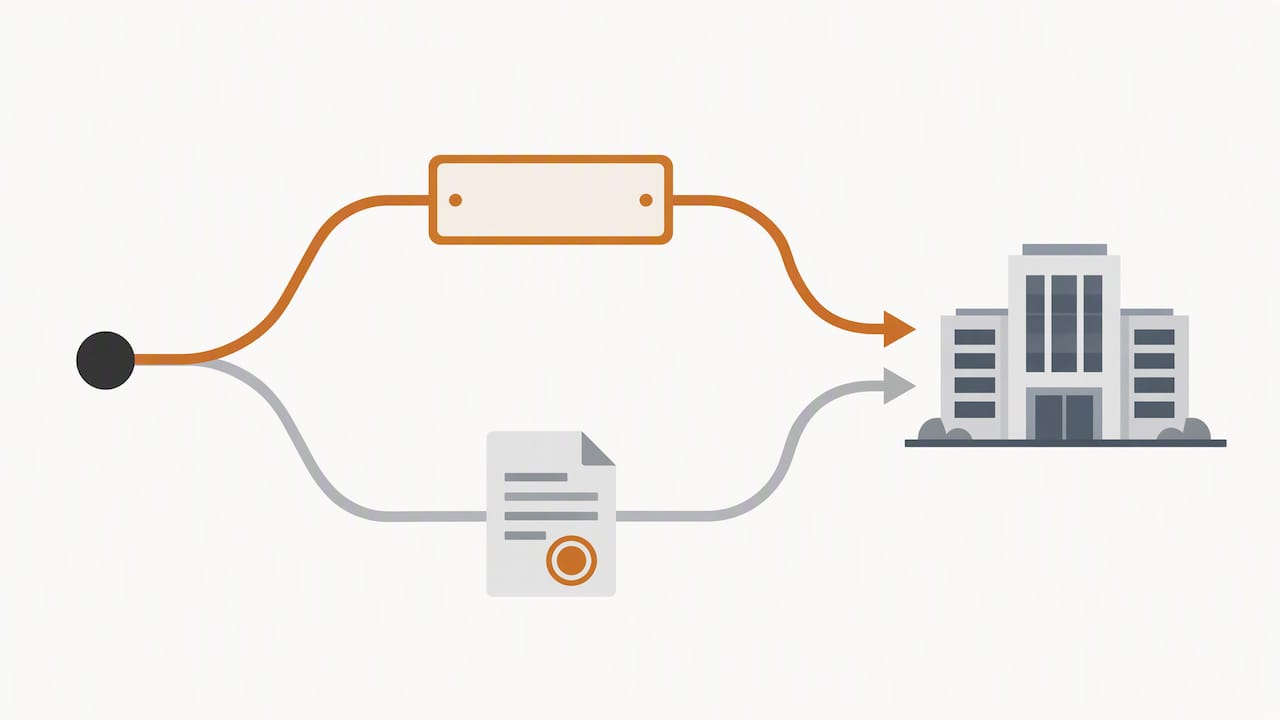
The fee moves with your Memorandum of Incorporation. A short-form, standard MOI keeps you at the lower figure. A custom or long MOI, a personal liability company, a public company or a long-form non-profit MOI pushes you toward the top of the range. CIPC webinar guidance confirms that the short versus long MOI choice decides whether you pay R175 or R475.
Two details save people money and confusion. Check your details before paying. And a name reservation is optional: if you skip it, the company can simply use its registration number as its name.
Which SARS registrations add cost after you register?
Once your company exists with CIPC, it is enrolled for corporate income tax automatically. Employer obligations follow separately. According to the SARS employer guide, you must register for PAYE, UIF and SDL within 21 business days of becoming an employer. Our walkthrough of employer payroll taxes and the 21-day window covers the timing in more detail.
- EMP101e application: the registration form asks for entity type codes, representative-employer particulars, payroll estimates and the date you become liable. An incomplete application can delay registration.
- SDL: registration categories and exemptions are set out in the same SARS guide, so check whether you qualify before budgeting for it.
- Corporate income tax: companies that are South African tax residents pay CIT and are classified as micro, small or medium to large, which shapes your reporting duties.
- VAT and turnover tax: the SARS small-business leaflet sets the VAT threshold at R2.3 million and describes Turnover Tax and Small Business Corporation rules, which can change your early tax costs.
None of these filings carry a large government fee. The cost is the payroll and accounting setup they require, plus the time it takes to get them right. Our overview of PAYE thresholds shows where those payroll triggers sit.
What do service providers charge, and what do packages leave out?
Provider packages sit on top of the official fees. Provider prices vary, so request quotes for the services you need. The price buys convenience, not a lower CIPC fee.
Packages usually include the CIPC filing, a name reservation and MOI drafting. They commonly exclude bank onboarding, tax registrations and B-BBEE or CSD setup, which is where surprise costs appear. Compare providers on these points:
- Delivery speed: check the provider’s stated turnaround and whether it makes a firm commitment.
- Included filings: CIPC only, or CIPC plus SARS registrations.
- Payroll handling: whether PAYE, UIF and SDL are registered for you or left to you.
- Refund or guarantee terms: what happens if CIPC rejects the application.
If payroll is the gap, tools matter too. Ready Accounting explains how to register and use SimplePay, which helps you judge what a payroll provider should do for you.
Pro Tip: Ask for the deliverables list in writing and pay CIPC directly, so you never pay the official fee twice or discover hidden charges after the fact.
What does a realistic first-year budget look like?
Government fees are the smallest line. These three scenarios show how the bill grows. We give no market-rate figures for banking or accounting here, since those vary by provider, so request quotes and add them in.
- Scenario A, minimal private company: R175 with a name, or R125 using the registration number, plus a basic business bank account and light bookkeeping. Registration is quick, and bank onboarding is usually the slowest step.
- Scenario B, hiring staff: everything in A, plus payroll software or a payroll provider, EMP101e registration for PAYE, UIF and SDL within 21 business days, and monthly payroll and accounting fees. UIF contributions are capped, as our guide to UIF contribution limits explains. Our payroll services overview shows what outsourcing this covers.
- Scenario C, formal small business scaling: a custom MOI at up to R475, B-BBEE certification and CSD registration for tenders, plus legal and HR advice. This is the highest range and the longest timeline, since each step depends on the one before.
Timelines differ. Registration itself is paperless and can move quickly once ID and director verification are done, while bank and payroll onboarding follow at their own pace. Budget time as carefully as money.
How can you lower upfront costs without risking compliance?
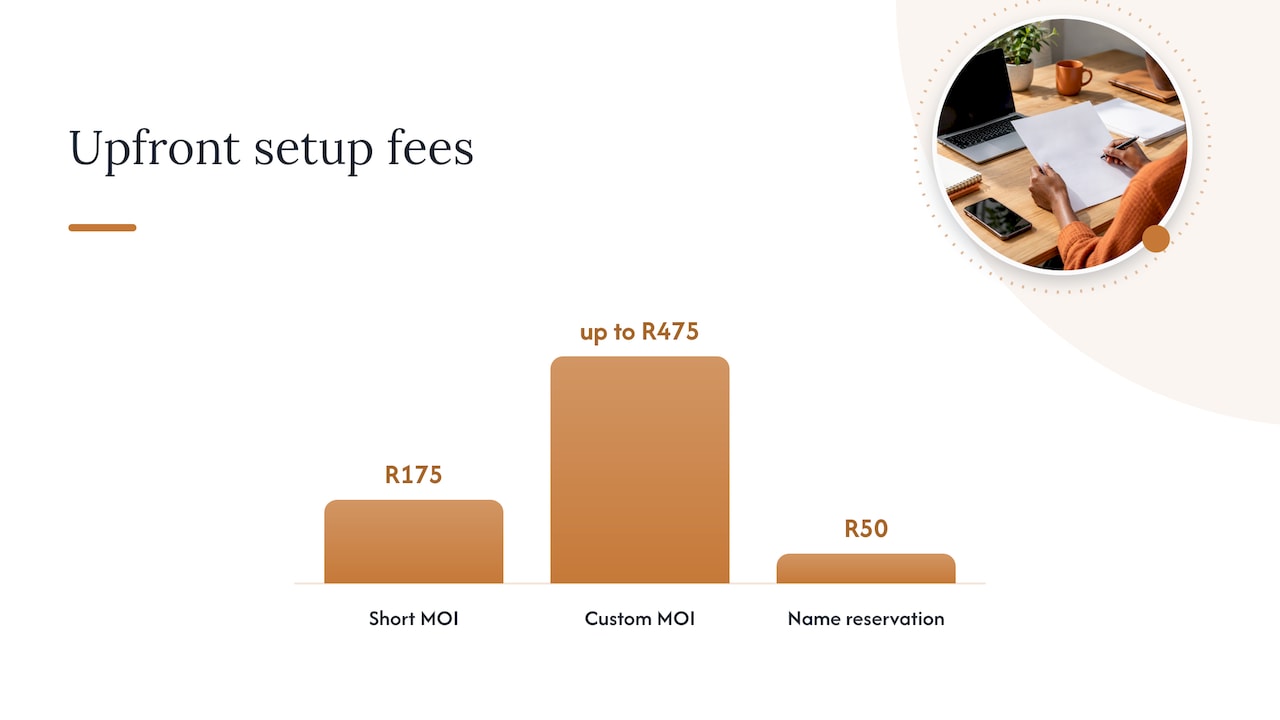
Start with the MOI. A standard short MOI costs R175, while certain customised MOI paths cost up to R475. Choose a custom MOI only when shareholder arrangements truly require it.
On naming, reserve a name when you need the brand secured before launch. Skip it when the registration number is acceptable for now, since you avoid the R50 fee and can change later.
- Pay CIPC directly for every filing.
- Limit provider packages to deliverables you cannot do yourself.
- Check whether payroll and SARS registrations are included before comparing prices.
- Review the payroll controls in the SMB payroll compliance checklist before deciding what to outsource.
- If speed and predictable monthly cost matter more than owning a local company, consider an Employer of Record instead of forming an entity.
Pro Tip: Total your first-year costs for every route before you commit, including payroll, accounting and compliance time, not just the CIPC fee.
When is a South African entity worth it, and when is an EOR smarter?
The filing fees are low, but they are not what makes entity ownership expensive. Banking, B-BBEE or CSD work, monthly payroll, tax filings and benefits administration accumulate month after month. That recurring burden is why an entity often costs materially more than the headline fee suggests.
Forming one makes sense when you plan a long-term local presence, need to contract locally or have tax reasons to hold assets there. When you simply want to hire skilled people quickly and with less risk, an Employer of Record is usually faster. Compare your full first-year budget against our flat monthly pricing and let the numbers decide.
— Roel
How does Expand to South Africa help you skip the entity?
We focus on South Africa. We employ your people through a local partner; current prices are on our pricing page. Ask us which contract, payroll and filing services are included in the offer. You get one predictable line item instead of a stack of provider fees.

Use our public pricing page alongside the scenarios above to compare entity costs with ours, and read our complete Employer of Record guide for the full walkthrough. Review the pricing, then contact us for a cost comparison or a demo.
FAQ
How much does it cost to register a Pty Ltd in South Africa?
A private company costs R125 to register, or R175 when you include a name, according to CIPC guidance. Customized MOI paths can raise the fee to R475. Provider and payroll costs come on top.
What is the cheapest way to start a company?
Register a private company with a standard short MOI and skip the optional name reservation, using the registration number as your name. That keeps your official fee at the R125 minimum. Add only the provider services you cannot handle yourself.
Is a name reservation required?
No. Name reservation is optional, and CIPC lets a company use its registration number as its name if none is reserved. If you want a specific brand protected, the electronic application costs R50.
Do I need to register with SARS after company registration?
Your company is enrolled for corporate income tax automatically. If you employ people, you must also register for PAYE, UIF and SDL within 21 business days, per the SARS employer guide.
Can I hire in South Africa without opening an entity?
Yes. An Employer of Record becomes the legal employer and runs contracts, payroll and statutory filings for you. That avoids entity setup entirely, which is the route we offer.
Sources
- Register the Business
- PAYE-GEN-01-G20 – Guide for Employers iro Employees Tax for 2025 – External Guide