

Under the Labour Relations Act, a dismissal is lawful in South Africa only if it rests on a fair reason and follows a fair procedure, as set out in sections 186 to 188. If you are an employee facing dismissal, save every date, message and document now, and refer a dispute to the CCMA promptly if you believe it was unfair. If you are an employer, document the investigation, give the employee a real chance to respond, and put your reasons in writing before you act.
TL;DR:
- Employers must follow a fair and proportional process for all dismissals, with specific procedures depending on the dismissal category, to avoid procedural unfairness.
- Proper documentation, genuine opportunities to respond, and objective criteria are critical for defending misconduct and incapacity dismissals at arbitration.
- In retrenchments, employers must conduct meaningful consultations, disclose relevant data, and apply consistent selection criteria to comply with Section 189.
- Employees have 30 days to refer an unfair dismissal dispute to the CCMA, with remedies including reinstatement, re-employment, or compensation up to 24 months’ pay for automatically unfair dismissals.
- Employers employing South African staff remotely should ensure legal compliance with contracts, payroll, and filings through specialist services to reduce dismissal-related risks.
Table of Contents
- Understanding the Legal Basis for Fair Dismissal
- The Procedural Fairness Checklist Every Employer Should Follow
- Running a Misconduct Dismissal That Holds Up
- Handling Incapacity and Poor Performance the Right Way
- The Retrenchment Process Under Section 189
- What Happens If You Challenge a Dismissal
- Avoiding UIF Filing Mistakes at Termination
- How CCMA Arbitration Actually Works
- How Expand to South Africa Reduces Dismissal Risk for International Employers
- A Practical Checklist for Reducing Dismissal Disputes
- Compliant Dismissal Support From Expand to South Africa
- FAQ
- Sources
Understanding the Legal Basis for Fair Dismissal
South African labour law does not leave dismissal to an employer’s discretion. Section 186 of the Labour Relations Act defines what counts as a dismissal, covering termination with or without notice, failure to renew a fixed-term contract where the employee expected renewal, and constructive dismissal where an employee resigns because conditions became intolerable. Section 188 then sets the test: a dismissal is fair only if the employer proves it was for a reason related to the employee’s conduct, capacity, or operational requirements, and that a fair procedure was followed.
Some dismissals sit outside this ordinary test entirely. Section 187 lists automatically unfair dismissals, where no justification can save the employer’s decision. These include dismissing an employee for:
- Exercising a right protected by the Act, such as joining a trade union or participating in a legal strike.
- Pregnancy, intended pregnancy, or any reason related to it.
- Discrimination on grounds like race, gender, disability, or religion.
- Taking action against the employer for failing to comply with the law.
- Transferring a business as a going concern, where the new employer dismisses staff to avoid honoring their terms.
Beyond these categories, the reason for dismissal determines which process applies. A misconduct dismissal turns on an employee’s behavior and demands a disciplinary inquiry. An incapacity dismissal, whether for poor performance or ill health, requires evidence of assistance and warning before termination. An operational requirements dismissal, commonly called retrenchment, is driven by the employer’s business needs rather than anything the employee did, and triggers a separate consultation process under section 189. Getting the category right matters because each one carries its own procedural checklist and its own remedy if an employer gets it wrong.
The Procedural Fairness Checklist Every Employer Should Follow
Item 4 of Schedule 8, the Code of Good Practice: Dismissal, sets the procedural standard that applies regardless of how small or informal your business is. The Department of Employment and Labour has been clear that flexibility for small employers does not mean freedom to skip a fair hearing; it simply means the process can be less formal than a courtroom. The core sequence looks like this:
- Investigate first. Gather facts proportional to the seriousness of the allegation before you say anything to the employee. A minor lateness issue does not need the same depth of inquiry as suspected theft.
- Notify in writing. Give the employee a written notice of the allegations, in a language they understand, with enough time to prepare a response.
- Hold the hearing. Let the employee state their case, call witnesses, and respond to the evidence against them. They may bring a co-worker or union representative.
- Decide and communicate. Reach a decision based on what was actually presented at the hearing, not assumptions made beforehand, and confirm it in writing with reasons.
- Remind them of their rights. Tell the employee, in the outcome letter, that they can refer a dispute to the CCMA or a bargaining council if they disagree.
The hearing itself does not need a court reporter or legal counsel on both sides. What it needs is a genuine opportunity for the employee to be heard by someone who did not already decide the outcome.
Pro Tip: Keep dated, signed notes of every step, the notice, the hearing minutes, and the outcome letter, because a CCMA arbitrator will ask for them long before they ask for your version of events.
Running a Misconduct Dismissal That Holds Up
Misconduct dismissals fail more often than any other category, usually because the employer treated the hearing as a formality rather than a genuine inquiry. The Code does not require a criminal-trial standard of proof or procedure. Guidelines on misconduct arbitration describe it as a flexible inquiry: what matters is that the employee understood the charge, had time to prepare, and got a real chance to respond before someone impartial.
Summary dismissal, meaning dismissal without notice, is justified only where the misconduct is serious enough to destroy the trust relationship outright, such as theft, assault, or gross insubordination. For lesser misconduct, progressive discipline (a verbal warning, then written, then final written) is usually expected before dismissal becomes proportionate. Arbitrators weigh this directly:
- Was the sanction proportionate to the misconduct, or could a warning have corrected the behavior?
- Does a pattern of smaller infractions justify dismissal even if no single incident would?
- Was the inquiry handled by someone with authority to decide fairly, rather than the same manager who laid the complaint?
- Is there a contemporaneous paper trail: investigation notes, the notice, the hearing record, and the outcome letter?
That last point explains most failed defenses at arbitration. Arbitrators look for documentary evidence created at the time, not reconstructed after the fact, and a poorly documented investigation is one of the most common reasons procedural fairness findings go against employers. For a deeper walk-through of the disciplinary enquiry and Item 7 of Schedule 8, see our guide to misconduct dismissal in South Africa.
Pro Tip: If you are unsure whether an offense justifies dismissal on its own, check whether the employee has prior written warnings for related conduct; cumulative misconduct often supports dismissal where a single incident would not.
Handling Incapacity and Poor Performance the Right Way
Incapacity dismissals split into two distinct tracks, and confusing them is a common employer error. Medical incapacity concerns an employee’s inability to work due to illness or injury, and typically calls for a medical assessment to establish the extent and likely duration of the incapacity before any decision is made. Poor performance, by contrast, concerns an employee who is capable of doing the job but is not meeting the required standard, and the law expects the employer to help them improve first.
For performance issues, the expected pathway is progressive and documented:
- Set clear, measurable standards and make sure the employee knows what is expected.
- Provide counselling and, where needed, training or a structured performance improvement plan.
- Give the employee a reasonable period to improve, with regular feedback.
- Issue warnings if performance does not improve, clearly linked to the standards already communicated.
- Only move to dismissal once it is clear that improvement is unlikely despite genuine assistance.
Arbitrators expect to see evidence at each stage: the performance plan itself, dated feedback notes, and proof the employee understood what was required. An employer who jumps straight to dismissal without any of this paper trail will struggle to show the process was fair, even if the underlying performance problem was real. The same logic applies to ill-health cases: a dismissal without a medical opinion on the employee’s prognosis and capacity to return to work is difficult to defend.
The Retrenchment Process Under Section 189
Operational requirements dismissals, or retrenchments, follow a separate track from misconduct and incapacity because the employee has done nothing wrong. Section 189 requires consultation before any final decision, and the scale of the exercise determines whether additional large-scale rules apply.
- Issue a written notice to consult. Set out the reasons for the proposed retrenchment, the alternatives considered, and the proposed selection criteria.
- Disclose relevant information. Employers must share enough detail, financials, headcount data, timing, for employees or their representatives to engage meaningfully rather than rubber-stamp the decision.
- Consult in good faith. Discuss ways to avoid the dismissals, minimize the number affected, change the timing, or mitigate the impact, such as severance packages above the statutory minimum.
- Apply objective selection criteria. Common fair measures include LIFO (last in, first out), skills, or performance, applied consistently rather than arbitrarily.
- Calculate and pay severance. The statutory minimum is one week’s pay for each completed year of continuous service, though a consultation process may result in more.
Trade unions or elected employee representatives play a central role here: where employees are unionized or have appointed representatives, the employer must consult with them directly rather than negotiating one-on-one with individuals, which can itself be challenged as a procedural failure. For a worked example of the severance calculation, see our guide on calculating severance pay in South Africa.
What Happens If You Challenge a Dismissal
An employee who believes a dismissal was unfair, whether for lack of a fair reason, a flawed process, or both, has a strict 30-day window from the date of dismissal to refer the dispute to the CCMA or the relevant bargaining council, as confirmed in the CCMA’s unfair dismissal info sheet. Missing that window can bar the claim unless condonation is granted for good cause.
If the dismissal is found unfair, section 193 of the LRA gives the arbitrator three possible remedies:
- Reinstatement, putting the employee back in their job as if the dismissal never happened.
- Re-employment, on terms the arbitrator considers reasonable, which may differ from reinstatement.
- Compensation, where reinstatement is not reasonably practicable or the employee does not want it back.
Compensation limits differ by the nature of the unfairness: purely procedural unfairness is typically limited to the employee’s loss up to the point of the hearing, substantive unfairness can be capped at up to 12 months’ remuneration, and automatically unfair dismissals, which fall under section 187, can attract compensation of up to 24 months and are adjudicated directly by the Labour Court rather than the CCMA. For employers, this distinction matters: a technically fair reason undone by a sloppy process still carries real financial exposure.
Avoiding UIF Filing Mistakes at Termination
Getting the dismissal right procedurally is only half the job; the administrative close-out matters too. For mass terminations, the UIF’s EASY AID spreadsheet application process lets employers submit bulk claims, but it requires an authorized-person letter and accurate employee data, and claims are commonly rejected for incorrect reason codes.
Getting the code wrong has real consequences for former employees, according to UIF guidance on mass terminations: coding an employee-initiated voluntary severance package as a resignation, for instance, can block their UIF claim entirely, since resignation does not qualify for benefits the way dismissal or retrenchment does.
Before closing out a termination, employers should confirm:
- The correct UI-19 reason code matches the actual circumstances of the termination.
- Outstanding leave pay, notice pay, and any severance due have been calculated and paid.
- Retrenched employees are registered with the Public Employment Services Unit and have completed the PES ESSA form, a step bulk filings commonly miss.
- Final payslips and termination letters are issued promptly to avoid delaying the employee’s own UIF application.
How CCMA Arbitration Actually Works
If a dispute reaches arbitration, it is not a review of what the employer decided; it is effectively a new hearing. The guidelines on misconduct arbitration confirm that arbitrators hear evidence afresh and assess procedural fairness against Item 4 of Schedule 8, rather than simply rubber-stamping the employer’s internal finding.
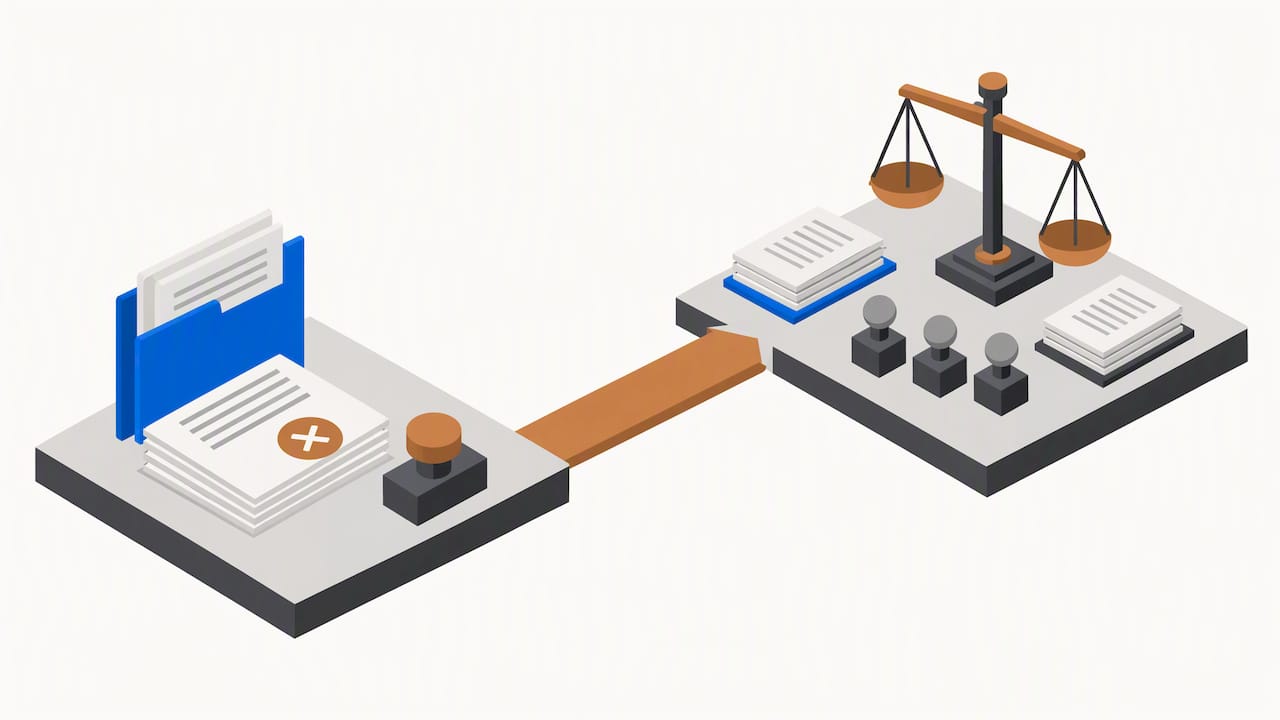
How your workplace procedures were structured also shapes the outcome. Arbitrators weigh disciplinary processes differently depending on their legal standing: procedures agreed in a collective agreement carry more weight than contractual procedures, which in turn outweigh a policy the employer wrote and applied unilaterally, though all are ultimately tested against the Code itself.
Practically, this means:
- Bring the same documents you relied on at the internal hearing: notices, minutes, and the outcome letter.
- Be ready to explain why the sanction fit the misconduct, not just that a rule was broken.
- Expect the arbitrator to probe whether the employee had a genuine opportunity to respond, since that single question decides more cases than any other factual dispute.
How Expand to South Africa Reduces Dismissal Risk for International Employers
When you employ South African staff without a local entity, dismissal risk multiplies fast: you need BCEA and LRA-compliant contracts, correct PAYE filings through EMP201, UIF and SDL contributions, and COIDA cover, all before a dismissal ever becomes a dispute. We handle each of these as part of our Employer of Record service, so the contract terms, payroll records, and statutory filings that arbitrators ask for already exist in the right format. Our local partner manages day-to-day employment under POPIA and GDPR, with EU data residency, and we can get signed contracts in place within 48 hours. That groundwork is what lets a dismissal, when it genuinely becomes necessary, rest on documentation rather than guesswork.
A Practical Checklist for Reducing Dismissal Disputes
If there is one lesson from watching dismissal disputes unfold, it is that the employers who win at arbitration are rarely the ones with the cleverest legal argument. They are the ones who documented, consulted, and considered alternatives before they acted. If you are an employee, your priority is simpler but just as time-sensitive: preserve your evidence and watch the 30-day referral clock closely, because a strong case filed late can still lose. If you are an employer, use objective criteria, keep dated records of every step, and bring in specialist advice before the hearing, not after the CCMA notice arrives.
— Roel
Compliant Dismissal Support From Expand to South Africa
If you are managing South African staff from abroad, the risk in a dismissal rarely comes from the decision itself: it comes from missing paperwork, a payroll filing that lagged behind, or a contract clause that never matched local law in the first place. 
We provide Employer of Record services in South Africa from £299 per month per employee, covering BCEA-compliant contracts, ZAR payroll, and the PAYE, UIF, SDL, and COIDA filings that a dismissal process depends on. There are no setup fees and no FX loading on top. If you need to fill a role before you worry about offboarding it, our talent sourcing service, priced at 55% per month, can help you find vetted candidates first. Check current pricing or talk to our team before your next termination becomes a dispute.
This article is general information, not a substitute for advice from a qualified lawyer. Consult a qualified legal professional about your own circumstances before acting on anything here.
FAQ
What is the correct procedure for dismissal?
A fair dismissal procedure requires investigating the allegation, giving the employee written notice, holding a hearing where they can respond, and communicating the outcome with reasons in writing. The standard comes from Item 4 of Schedule 8, and the process can be informal for small employers but must still be genuinely fair.
What are the new dismissal rules in South Africa?
The Department of Employment and Labour has circulated a draft Code of Good Practice on Dismissal for public comment, aimed at clarifying flexibility for small businesses within the existing procedural fairness framework; the underlying tests in sections 186 to 188 of the LRA remain unchanged while the draft is under consultation.
How much is the payout for dismissal in South Africa?
There is no single flat payout; it depends on the dismissal type and outcome. Retrenched employees are entitled to severance pay of at least one week’s pay per completed year of service, while employees who win an unfair dismissal claim may receive reinstatement, re-employment, or compensation under section 193 of the LRA.
What are the three types of dismissals?
South African labour law recognizes dismissal for misconduct, dismissal for incapacity (covering both poor performance and medical incapacity), and dismissal for operational requirements, also called retrenchment. Each category follows its own procedure under the LRA and the Code of Good Practice, and getting the category wrong is itself a common cause of procedural unfairness findings.
Sources
- Department of Employment and Labour provides facts on the Code of Good Practice on Dismissal and Labour Law Amendments
- Gov
- Unfair dismissal dispute info sheet (CCMA)