

A foreign company with no South African entity is a non-resident employer. Whether it must withhold PAYE depends on two things: whether it conducts business through a permanent establishment (PE) in South Africa, and whether it has a representative employer there. Even where PAYE does not apply, other obligations and risks for you and your employee can remain. This guide explains the rules as they stand, what is proposed, and how to hire compliantly.
TL;DR
- Since 22 December 2023, a non-resident employer with a South African PE, or with a representative employer, falls within the PAYE withholding rule.
- A foreign employer with neither is not required to withhold PAYE, but the employee may become a provisional taxpayer, and UIF and SDL questions remain.
- Employment income is generally sourced where the work is done, so an employee working in South Africa usually earns South African-source income.
- The 2026 Budget and an October 2026 draft proposal would narrow the PAYE rule further. Neither is law yet.
- An Employer of Record (EOR) lets you employ people locally without creating your own entity or PE exposure through the employment relationship.
Table of Contents
- What “non-resident employer” means
- When the employee’s income is South African-source
- The PAYE rule since 2023
- Permanent establishment risk
- Representative employers
- Registration, certificates and deadlines
- UIF and SDL
- What happens to the employee if you do not withhold
- Proposed changes
- Hiring compliantly without a local entity
- A short checklist
- FAQ
- Sources
What “non-resident employer” means
South Africa taxes on a residence basis: residents are generally taxed on worldwide income, while non-residents are taxed on South African-source income, according to SARS. A non-resident employer is simply a company that is not tax resident in South Africa, typically because it is incorporated and managed abroad.
The question for you is not your own residence. It is whether the employee’s work, and your business, create a taxable connection in South Africa.
When the employee’s income is South African-source
Employment income is generally sourced where the employee renders the services, per the IBA Talent Mobility Guide. A developer in Cape Town working for a US company therefore earns South African-source income, regardless of where you pay the salary from.
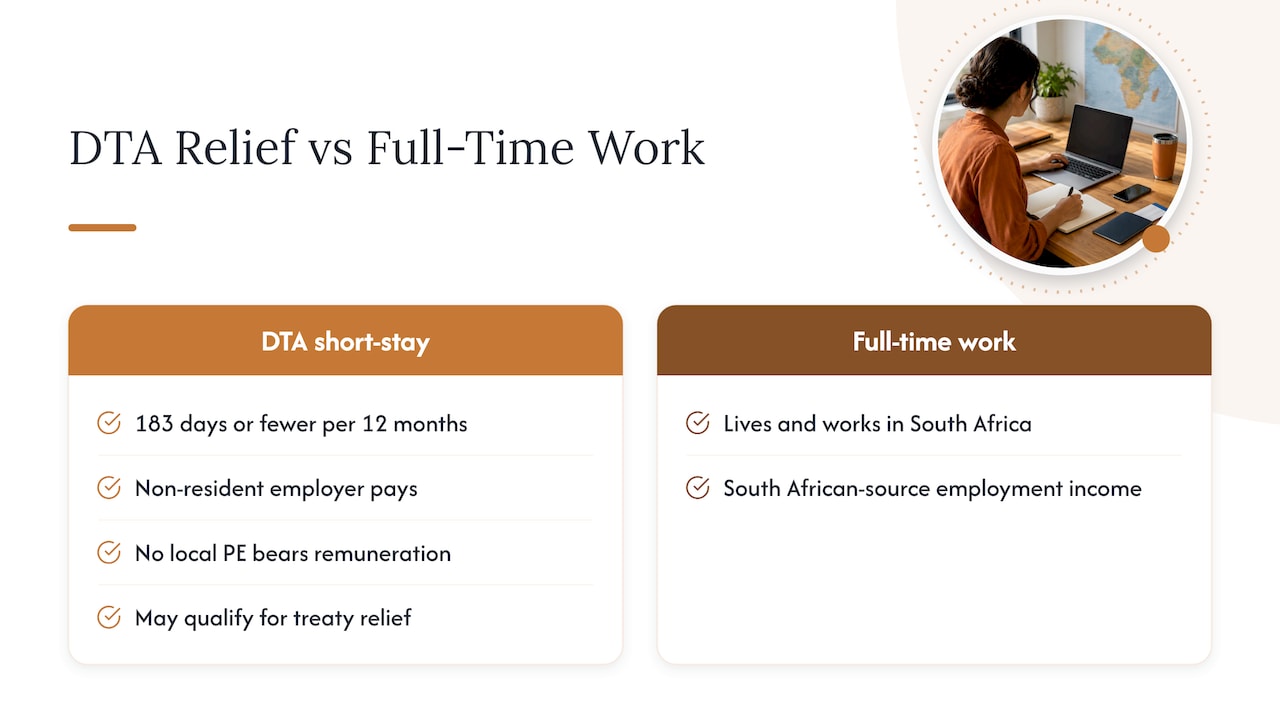
There is a treaty relief route. Under a double taxation agreement (DTA), a non-resident present in South Africa for 183 days or fewer in any 12-month period may be exempt where a non-resident employer pays the remuneration and no local PE bears it, says SARS. That fits business travelers, not someone who lives and works in the country full time.
The PAYE rule since 2023
The Tax Administration Laws Amendment Act 18 of 2023 requires non-resident employers conducting business through a PE in South Africa to deduct employees’ tax, and extends the obligation to all representative employers, as the Government Gazette sets out. Deloitte reports that the change took effect on 22 December 2023.
The Act does not impose PAYE withholding on a foreign employer that has neither the specified PE connection nor a representative employer, according to the Act as published by Parliament. The same Deloitte note flags a continuing anomaly for SDL and UIF in that situation.
| Your situation | PAYE withholding by you |
|---|---|
| Non-resident employer with a South African PE | Yes |
| Non-resident employer with a representative employer | Yes |
| Neither a PE nor a representative employer | Not required under the Act |
The third row is not a free pass. It leaves the employee to manage their own tax, and it ignores PE risk, which is covered next.
Permanent establishment risk
A PE can include a fixed place of business, a home office where an employee has authority to conclude contracts, or extended service provision, among other indicators, as BDO describes. Hiring a senior salesperson who signs deals from a home office in Johannesburg is the classic example.
BDO recommends that foreign employers assess their PE status, register as an external company with the CIPC where necessary, and set up a compliant South African payroll. For a broader view of how companies of different types handle hiring, see our Employer of Record guide for South Africa.
PE questions are also a staffing question in other markets. Recruiters hiring across borders face the same analysis, as this overview of hiring costs and permanent establishment exposure shows for another region.
Representative employers
A representative employer is a natural person residing in South Africa who performs the employer’s duties under the Fourth Schedule to the Income Tax Act, per the SARS EMP101e form. Appointing one means that person carries filing duties and the PAYE withholding obligation applies.
Many foreign founders find this impractical: it asks an individual in South Africa to take on tax responsibilities for a company they do not control.
Registration, certificates and deadlines
An employer must register with SARS within 21 business days of becoming an employer, unless none of its employees is liable for normal tax, SARS states. Our checklist on registering for payroll taxes within 21 days walks through the steps.
Employees must receive an IRP5 certificate showing all remuneration and deductions, and an IT3(a) for taxable benefits on which PAYE was not deducted, per SARS (2026).
Once registered, monthly returns follow. Read about the EMP201 deadline on the 7th and the current PAYE thresholds.
UIF and SDL
Foreign employers with employees rendering services in South Africa remain obligated to make UIF contributions and pay SDL, according to SAIT’s submission to National Treasury. This applies even when PAYE does not. Details are in our pages on UIF contributions and the SDL rate.
What happens to the employee if you do not withhold
For a South African tax-resident employee working abroad for a foreign employer with no representative employer in South Africa, there is no PAYE obligation. The employee must register as a provisional taxpayer and settle any liability through provisional payments, SARS explains.
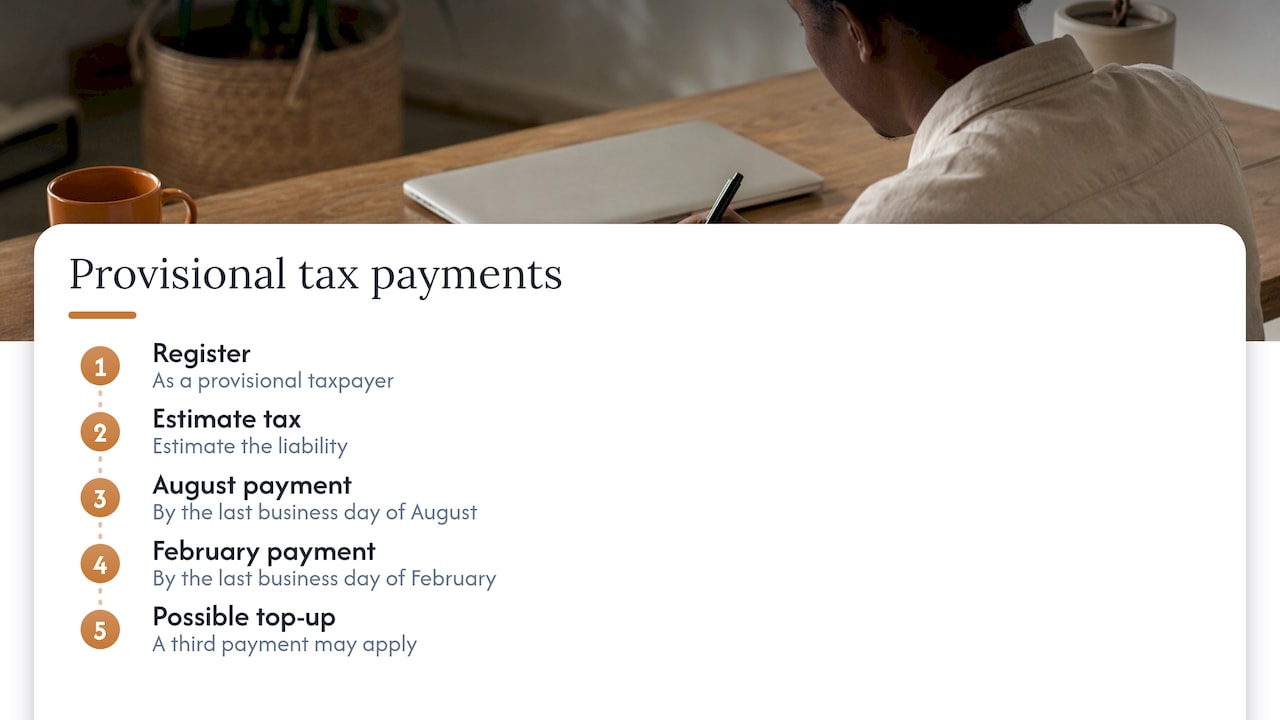
Provisional tax generally means an estimate and at least two payments, by the last business day of August and of February, with a possible third top-up, per SARS. Remuneration from an employer not registered for employees’ tax can make someone a provisional taxpayer, subject to exclusions.
Where PAYE obligations do exist and are missed, the IBA guide notes that tax, penalties and interest can fall on both employer and employee. Tax treaties generally prevent double taxation by giving a credit in the country of residence, per the SARS guide above.
Proposed changes
The 2026 Budget proposes that non-resident employers withhold only where the employee is effectively connected with the employer’s South African PE, per the National Treasury Budget Review. Straxiom reports a 21 October 2026 draft that would also require the remuneration to be paid, payable or borne by the PE. It is not enacted, and the existing rule continues until promulgation.
Treat these as direction of travel, not a reason to wait. Check SARS and National Treasury for the current status before you decide.
Our view
We built Expand to South Africa around one conclusion: the safest answer to the non-resident employer question is not to find the gap in the PAYE rule, but to remove the question. When a licensed local partner is the legal employer, PAYE (EMP201), UIF, SDL and COIDA are filed in South Africa by an entity that already exists there, and your company is not asked to appoint a representative or guess at PE status.
We are also open about who employs your people. Your team works for you day to day, while the local partner holds the contract under BCEA-compliant terms and runs ZAR payroll. Skilled roles typically cost 40 to 60% less than in the UK or EU, and the time zone sits within about one hour of CET.
Roel
Hiring compliantly without a local entity
There are three practical routes: set up a subsidiary, appoint a representative employer and take on the PE analysis yourself, or use an Employer of Record. Our EOR services cost from £299 per employee per month, as published on our pricing page, with local payroll services included in the model. Contracts can be signed within 48 hours.
If you also need to find the person, see our talent sourcing service.
A short checklist
- Confirm where the employee will physically work and for how many days.
- Assess whether their role could create a PE, especially contract-signing authority.
- Decide between entity, representative employer or EOR.
- Register for PAYE, UIF and SDL within 21 business days if you are the employer.
- Issue IRP5 certificates and file reconciliations on time.
- Re-check the draft PAYE amendments before each tax year.
FAQ
Does a foreign employer have to withhold PAYE in South Africa?
Only where it conducts business through a South African PE or has a representative employer. A foreign employer with neither is not required to withhold under the 2023 amendment. UIF and SDL questions can still arise, so take advice from a South African tax practitioner.
Can a foreign company employ someone in South Africa without an entity?
Yes, through an Employer of Record, which employs the person through a local licensed partner. You direct the work while the partner handles contracts, payroll and statutory filings.
Is employment income tax free if I work abroad?
Not automatically. Income is generally taxed where the work is performed, and residents are taxed on worldwide income. A DTA may exempt a non-resident present for 183 days or fewer under set conditions.
Are the PAYE rules about to change?
Proposals from the 2026 Budget and an October 2026 draft would narrow the rule to employees connected with the PE. They are not law yet.
Sources
- Tax and Non-Residents, SARS
- IBA Talent Mobility Guide: South Africa
- Tax Administration Laws Amendment Act 18 of 2023, Government Gazette
- Act 18 of 2023, Parliament
- Deloitte: Foreign employers and their SA employment tax obligations
- BDO: New tax requirements for foreign employers
- SARS EMP101e registration form
- SARS: Registering for PAYE
- SARS: Taxation in South Africa
- SAIT submission to National Treasury
- SARS FAQ: Foreign Employment Income Exemption
- SARS: Provisional tax
- National Treasury 2026 Budget Review, Annexure C
- Straxiom: South Africa proposes narrower PAYE rule